
Inland Empire → Las Vegas · Relocation guide
Moving from the Inland Empire to Las Vegas
This is the one region where we will not lead with equity. Riverside County's median is $620,000 against $475,000 here, so the housing gap is the smallest in Southern California. What actually changes is the commute and the state income tax — and transportation is the one budget line that gets cheaper when you move.
the Inland Empire median
$620,000
September 2026
Las Vegas median
$475,000
77% of the IE
The gap
$145,000
At the median
Transport cost
−$100
Per month — it falls, unlike every other region
Nevada income tax
None
No personal, corporate or franchise tax
What you gain
Straight answer first
The equity release is modest. The commute and the tax are the story.
At the Riverside County median of $620,000, a seller still carrying a $400,000 loan nets roughly $176,600 after costs. That is a solid down payment here, not a cash purchase, and anyone telling you an Inland Empire move funds a mortgage-free house is working from a coastal benchmark.
What does change is substantial. The California income tax stops. And unusually, your transport cost falls rather than rises, because an Inland Empire commute is one of the longest in the country and a Las Vegas one is about thirty minutes.
Every other California origin in this series sees transport costs rise after the move. The Inland Empire is the exception: $1,050 a month down to $950, because you are leaving a commute rather than acquiring one.
If you currently drive to Orange County or Los Angeles, that line understates it. Count the hours as well as the fuel.
| At the the Inland Empire median | |
|---|---|
| Sale price | $620,000 |
| Remaining loan | −$400,000 |
| Selling costs at roughly 7% | −$43,400 |
| Net proceeds | $176,600 |
An illustration using the September 2026 county median and an assumed loan balance. Your own figure depends on your balance, your sale price and your actual costs.
The real gain
Thirty minutes instead of ninety
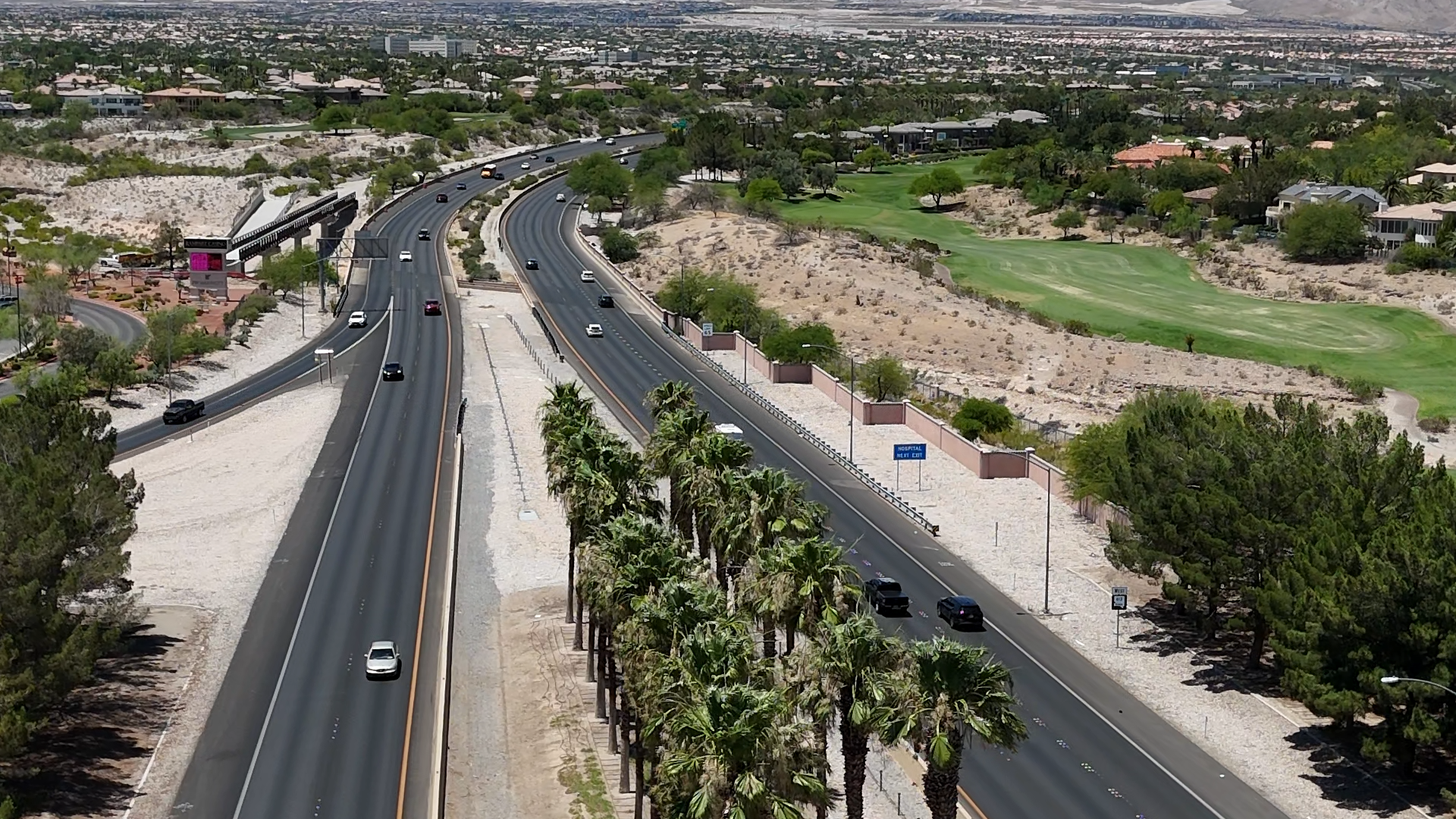
The average Las Vegas commute is about half an hour. If you are currently driving from Corona to Irvine, or Fontana to downtown LA, that is the single biggest change in this move and it does not show up in a price comparison.
An hour saved each way is five hours a week and around 240 hours a year. Whatever the housing numbers do, that part is real.
Monthly
What you keep each month
The household budget and the California income tax change at the same time. Comparisons that show only the first understate the move considerably.
| Monthly category | the Inland Empire | Las Vegas | Change |
|---|---|---|---|
| Rent | $3,100 | $2,500 | −$600 |
| Utilities and internet | $350 | $430 | +$80 |
| Transportation and insurance | $1,050 | $950 | −$100 |
| Health costs and child care | $1,250 | $1,400 | +$150 |
| Food and household | $1,050 | $1,050 | — |
| California visits and travel | $100 | $350 | +$250 |
| Budget change | $6,900 | $6,680 | −$220 |
An illustrative household comparison, not regional price quotes. Running the air conditioning and driving a wider valley are real costs, and they belong in the table.
Then the tax
| Household income | Single filer | Married filing jointly |
|---|---|---|
| $150,000 | $1,039 / mo | $698 / mo |
| $200,000 | $1,427 / mo | $1,083 / mo |
| $250,000 | $1,814 / mo | $1,471 / mo |
The budget change above plus California state income tax no longer paid, on 2026 California brackets and standard deductions. Illustrative: your figure depends on filing status, deductions, credits and income source. Nevada residence does not change federal tax.
A full relocation runs around $16,000 — transport, packing, travel, temporary housing, deposits, initial furniture and a contingency.
At $150,000 jointly it is nearer 23 months. Every month after that is yours.
Your part of the IE
It is not one move
What changes depends on where you are leaving
the Inland Empire is not a single housing market or a single way of living, and the move looks different from each part of it. Find yours below.
Riverside, Corona, Eastvale and Jurupa Valley
Riverside, Corona, Eastvale, Norco, Jurupa Valley
Separate the home you want from the commute you want to leave. You may work locally, in Orange County, or farther west, and moving the house changes every one of those arrangements. Get written attendance requirements before you compare neighborhoods.
For planned suburban housing, compare Summerlin, Green Valley Ranch, Inspirada and Southern Highlands by budget and work location, looking at usable yards, parking, association layers and school routes. A familiar streetscape does not establish equivalent services or programs.
Norco households using land for horses, equipment, trailers or a workshop need a parcel-specific search. Check zoning, animal rules, water, utilities, access and association restrictions — a large lot or an RV gate in a listing does not establish permission for the use you have in mind.
Rancho Cucamonga, Upland, Ontario and the western valley
Rancho Cucamonga, Upland, Ontario, Montclair, Chino, Chino Hills
Distinguish proximity to Ontario International from proximity to your actual California destination. Returning for a meeting in Ontario is a different trip from continuing into Los Angeles or Orange County.
Compare west-valley planned neighborhoods and established Henderson areas for parks, shopping and housing form, and include northwest and North Las Vegas properties where they fit the job and the budget.
Avoid choosing a southern Nevada address purely for California access and creating an awkward daily Nevada commute in the process. The trip you make twice a month should not dictate the one you make every day.
San Bernardino, Fontana, Rialto and Colton
San Bernardino, Fontana, Rialto, Colton
Compare your own rent or mortgage against actual Nevada alternatives. A statewide California median badly misrepresents this household's starting point, and we would rather you work from your real numbers than from a headline.
For logistics, manufacturing, public services and other site-based work, confirm the precise reporting facility, shift and pay. A company operating in both states does not establish that a particular employee can transfer.
Night shifts change more than the commute. School pickup, child care and the hours you will be driving all shift with them, and that belongs in the housing decision.
Redlands, Loma Linda and the eastern communities
Redlands, Loma Linda, Highland, Yucaipa, Beaumont, Banning
Identify which features matter most: an established center, a medical network, a university connection, a newer subdivision, outdoor access. Those priorities lead to genuinely different Nevada searches.
If you regularly use a Loma Linda or other Inland Empire specialist, establish Nevada care or price the complete return journey before buying. This is the most common thing we see households leave until after closing.
For health care or education employees, resolve licensing, benefits and an actual position. The presence of hospitals and schools in a destination is not the same as a job in one.
Temecula, Murrieta, Menifee and Lake Elsinore
Temecula, Murrieta, Wildomar, Menifee, Lake Elsinore, Perris
Southwest Riverside County needs its own travel calculation. Returning here adds substantial ground travel after you reach the western Inland Empire, and an Ontario arrival does not complete the journey.
If family, care or recurring appointments are in this corridor, map the full door-to-door trip before you treat the flight time as the cost.
Victorville, Hesperia and the High Desert
Victorville, Hesperia, Apple Valley
Victor Valley households already know desert driving, wind and hot weather. That experience is useful but does not establish comfort with a particular Las Vegas home, its nighttime temperatures or its cooling costs. Compare utility history, shade, insulation and the actual lot.
I-15 access makes return trips genuinely easier from here, so it may reasonably shape the search. Test the full route and its reliability anyway — proximity to the freeway does not make regular California attendance a local commute.
Desert and mountain households need their own baseline
Coachella Valley, Hemet, San Jacinto, Lake Arrowhead, Big Bear
These are not interchangeable with Riverside or Ontario, and the worked budgets on this page are not regional averages for them.
Use your actual property, elevation, climate, travel route and employment arrangement. If you are coming from Big Bear or Lake Arrowhead in particular, the climate change runs in an unusual direction and deserves its own conversation rather than a county median.
Work & income
Settle this first
Site-based work, shifts and the commute you are leaving
The housing math only holds if the income does. This is the part we see households resolve last, and it should be first.
For logistics, warehousing, manufacturing and public-sector roles, confirm the precise reporting facility, shift and pay before anything else. A company operating in both states does not mean a given employee can transfer, and a warehouse job title is not portable by itself.
If you currently drive to Orange County or Los Angeles, be clear about what you are actually solving. Ending that commute is worth real money and several hours a week, but only if the job moves or is replaced on acceptable terms.
For health care and education, resolve licensing, benefits and an actual position rather than relying on the presence of hospitals and schools here. For a two-earner household, model both careers.
Work out what happens if attendance rises, a shift pattern changes, pay is adjusted, or the role ends.
With a more modest equity release than coastal households, an Inland Empire move has less cushion in it. That is not a reason not to move; it is a reason to keep a reserve and to know your fallback before you make an offer.

What else changes
A different kind of city on your doorstep
Tourism supports dining, entertainment and professional sports far beyond what a metro this size would normally carry, and it is available on an ordinary weeknight rather than as a day trip.
For households used to driving an hour for any of it, that is a meaningful part of the trade.
Where to land
The valley
Areas to investigate
Starting points rather than rankings. Build the shortlist around ordinary life — the work route, the school run, the weekly shop — rather than around a community name you have read about.
| Area | Why it comes up for you | Main checks |
|---|---|---|
| Summerlin | Familiar planned form, though at a real step up in price from most of the Inland Empire | Village, dues, school assignment, work route |
| Green Valley & Green Valley Ranch | Established Henderson services at a more achievable entry point | Home systems, school route, traffic, association layers |
| Inspirada, Anthem & Seven Hills | Newer south-valley stock; compare delivered cost against your current payment | Exact subdivision, elevation, fees, daily travel |
| Southwest valley & Enterprise | Often the best value match for an Inland Empire budget | Jurisdiction, construction, road access, noise |
| Southern Highlands & Mountain's Edge | Planned settings with the shortest run back to the I-15 | Work access, rules, fees, completed home cost |
| Northwest & Centennial | Where to look if you are leaving Norco or a property with horses or equipment | Zoning, permitted storage, services, commute |
| North Las Vegas incl. Aliante | Lowest entry prices in the valley; verify the work route first | Specific location, workplace access, condition, dues |
| Downtown & Arts District | Rarely the fit for an Inland Empire household, but worth seeing before you rule it out | Walking routes, groceries, parking, building finances, noise |
| Cadence & Lake Las Vegas | East-valley options; furthest from the I-15 run to Southern California | Daily services, fees, amenities, intended use |
Characteristics rather than rankings. Henderson students generally use Clark County School District's address and enrollment system — a Henderson address is not a separate city school district or a guarantee of a particular campus.
Where we come in
You know the county. We know the valley.
Most the Inland Empire households we work with have already decided. What they need is someone who can match the area to how they actually live, deploy the proceeds into the right house, negotiate with a builder, and make sure nothing gets left on the table in year one.
Questions
the Inland Empire to Las Vegas, answered
What does my the Inland Empire equity buy in Las Vegas?
How much do I actually keep each month?
How long before the move pays for itself?
I have a 3% mortgage. Does the move still work?
How bad is the summer coming from the Inland Empire?
Where do the Inland Empire households usually end up?
Is it actually cheaper to move from the Inland Empire to Las Vegas?
I still owe most of my mortgage. Is there enough equity to make this work?
Keep reading
More for people moving here
Start here
California to Las Vegas
Taxes, residency, selling or keeping your home.
Where
All 30 Summerlin villages
The west valley, village by village.
Budget
Cost of living
Beyond the mortgage payment.
Comparison
What $400k buys here
Against the rest of the west coast.
Choosing
Evaluating a neighborhood
The checks that are not on the listing.
General
Las Vegas relocation guide
What to sort out before and after you arrive.
Sources and currency
the Inland Empire median: September 2026 county figure. Las Vegas median: our own November 2026 market update. California income tax figures calculated on 2026 California brackets and standard deductions. Clark County property tax caps: Clark County Assessor. California residency and sourcing: California Franchise Tax Board.
Budget comparisons, equity scenarios, loan illustrations and tax savings on this page are illustrative assumptions for hypothetical households, not price quotes, rate quotes or predictions. Tax rules depend entirely on your own facts. Nothing here is tax, legal or lending advice — we are real estate agents, and the residency and sourcing questions need a qualified tax adviser.