

Las Vegas & Henderson · Investor guide
Investing in Las Vegas real estate
A desirable $450,000 house renting at $2,500 a month loses roughly $12,480 a year. That is not a bad property — it is a property bought at the wrong price. Here is how the numbers actually work, what the rules allow, and where the deals break.
Single family median
$475,000
Valley-wide, November 2026
Condo & townhome median
$290,000
Southern Nevada, September 2026
30-year fixed
7.24%
Freddie Mac, late October 2026
Months of supply
~5
Combined, September 2026
Metro unemployment
4.8%
September 2026, not seasonally adjusted
Before you buy
The discipline
Buy an investment that survives a bad year
Real estate in this valley can build wealth through rent, loan repayment, improvement and appreciation. None of that happens automatically. The central discipline is to buy something that survives realistic expenses, legal restrictions and an unfavourable year.
Write the objective before you look at listings. Monthly income, long-term wealth, a future home, diversification and a renovation business are different goals, and they point at different properties. A property that serves one can fail badly at another.
Set five limits, in writing
- Total available investment cash — everything you could commit.
- Cash that must remain untouched — household reserves that are not part of this.
- Maximum acceptable annual loss — the number at which you would be in trouble.
- Minimum holding period — because selling costs make short holds expensive.
- Time available to manage it — honestly, not optimistically.
An investor with $170,000 available who needs $30,000 protected has a $140,000 property budget — including closing costs, repairs and reserves, not just the down payment.
Asset type, location, age or condition, permitted lease length, price ceiling, target return, financing, and the conditions that disqualify a property outright.
The value of a written buy box is that it stops you quietly erasing the vacancy allowance and the replacement reserve to make a deal pass. If nothing meets the target, change the price range, the asset type, the leverage or the strategy explicitly — rather than adjusting the assumptions until a weak deal looks acceptable.
Jurisdiction
A mailing address does not establish the rules
The valley contains incorporated Las Vegas, Henderson and North Las Vegas, plus unincorporated Clark County. A "Las Vegas" postal address is not proof that City of Las Vegas rules apply to the parcel — and the rules differ enormously.
This matters most for short-term rentals, where one jurisdiction's programme is closed and another's registration does not survive a sale. It also matters for permitted units, licensing and tax districts.

One valley, four rulebooks
The boundary you cannot see from the street
Incorporated Las Vegas, Henderson, North Las Vegas and unincorporated Clark County sit side by side across this valley, and nothing on the ground tells you which one a parcel falls in.
That line decides whether a short-term rental is possible at all, what licensing applies and which department you have to satisfy. Establish it from the parcel number, not the mailing address.
Build a parcel record before you offer
- Legal owner, parcel number and the actual jurisdiction
- Zoning and permitted dwelling units
- Recorded restrictions, HOA and master association
- Tax district and improvement assessments
- Licensing authority for the intended use
City or county approval, private covenants, lender requirements and insurance must all support the intended activity. A municipal permit does not erase an HOA restriction, and a friendly email from an association does not override a recorded covenant.
Resolve conflicts before the cancellation deadline. For additional dwelling units, room rentals and converted garages, separate meters or a sitting tenant do not prove the second unit is lawful.
Comparing areas
There is no best investment neighbourhood
Price, rent, association expense, condition, tenant demand and exit liquidity have to be compared together. Any ranking that ignores one of them is marketing.
A $390,000 house renting at $2,200 is not automatically better than a $450,000 house renting at $2,500. The first may need immediate HVAC and roof work; the second may carry higher association costs. Compare after all costs, capital requirements and realistic downtime.
If a community premium is embedded in the purchase price but absent from achieved rents, it reduces your yield.
A pool that adds $100 to monthly rent while costing $180 a month to service, before repairs and insurance, is a net loss dressed as an amenity.
Run the numbers
Worked deal
A desirable house that loses $12,480 a year
This is the most useful example in Las Vegas investing right now, because the property is perfectly good. The arithmetic is what fails.
| Input | Assumption |
|---|---|
| Purchase price | $450,000 |
| Down payment | 25% — $112,500 |
| Loan | $337,500 over 30 years at 7.5% |
| Principal & interest | $2,360per month |
| Market rent | $2,500per month |
| Vacancy | 5% |
| Management | 8% of collected rent |
A hypothetical teaching example. Not an available property, an appraisal, a market rent claim or a loan offer.
| Result | Figure |
|---|---|
| Net operating income | $18,240per year |
| Cap rate | 4.05% |
| Debt service coverage | 0.64 |
| Total cash committed | $151,000down, closing, repairs, reserves |
| Annual cash flow | −$12,480about −8.3% cash on cash |
| Break-even rent | $3,690against $2,500 market |
Break-even calculated as ($2,360 + $200 + $665) ÷ (0.95 × 0.92), holding fixed costs constant. It does not predict that tenants will pay that rent.
The property needs $3,690 and the comparables support $2,500. No amount of optimism closes a $1,190 monthly gap.
The answer is to change the price, the debt structure or the property — not to invent a higher rent, trim the vacancy allowance or quietly delete the replacement reserve. That is the single most common way an investor talks themselves into a losing purchase.
Two more
More units and more equity do not automatically fix it
Why price is the lever
The same house works or fails depending on what you paid
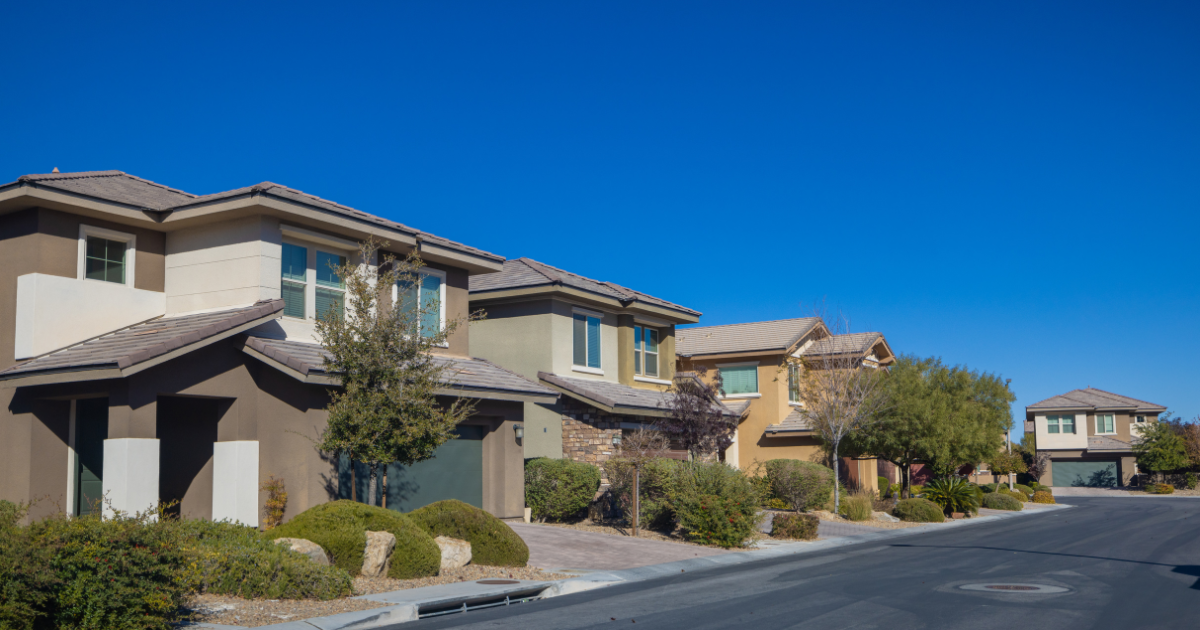
Nothing about the property in Example A is wrong. The roof is fine, the location is fine and the rent is market. It still loses more than twelve thousand dollars a year.
Change the price by fifty thousand and the arithmetic turns. That is the entire discipline, and it is why underwriting happens before the offer rather than after the inspection.
A fourplex at $700,000
Four units at $1,500 each produce $72,000 scheduled rent. After 7% vacancy and collection loss, effective income is $66,960. After management, tax, insurance, owner utilities, repairs, leasing and other recurring costs, net operating income is about $40,403 — a 5.77% cap rate, better than the house.
At 30% down, annual debt service is about $41,114. After a $6,000 capital reserve, cash flow is approximately negative $6,711. At 50% down it turns positive at about $5,036 — but on $410,000 committed, that is roughly 1.23% cash on cash.
More cash down makes the property survive. It does not change the unlevered income, and it does not make a low yield on equity disappear.
If you need 50% down to reach 1.23%, the honest question is what else that capital could do.
A deal that clears the target
A $300,000 property with verified $2,600 rent, 6% vacancy, 8% management and $500 monthly fixed costs produces about $1,748 monthly net operating income. At 25% down and 7.5%, debt costs about $1,573 and cash flow after reserves is roughly negative $25.
At $250,000 with everything else unchanged, debt costs about $1,311, cash flow after reserves is about $238 a month, coverage is 1.33, and on $95,000 committed that is roughly 3.0% cash on cash.
A $50,000 price difference moves the deal from marginally negative to workable. Price is the lever that actually works.
Method
Solve for the price, not the rent
If annual net operating income is $20,000 and your target cap rate is 5.5%, the indicated price is $363,636. That is the price your return target implies — not an appraisal, and not a prediction that a seller will accept it.
| Metric | What it measures |
|---|---|
| Cap rate | Annual NOI ÷ price. Unlevered operating income against price. |
| Cash on cash | Annual pre-tax cash flow after debt and reserves ÷ cash committed. |
| Debt service coverage | NOI ÷ annual principal and interest. Below 1.0 means the property does not cover its own debt. |
| Total return | Cash flow plus principal repayment plus value change, less costs and taxes. |
State whether reserves are included or excluded. Inconsistent conventions are why two people can analyse the same property and disagree about whether it works.
The 1% rule ignores expenses, condition and financing. The 50% expense rule can miss actual local costs badly. A low gross rent multiplier does not prove a bargain.
And buying below asking is not buying below value. A home listed at $500,000 and bought at $460,000 is still expensive if the comparables support $440,000.
Separate operations from replacements
Scheduled rent, less vacancy and bad debt, gives effective income. Less routine operating expenses gives net operating income. Less debt service and capital reserves gives spendable cash flow. Keeping those steps distinct is what makes properties comparable.
A $1,800 turnover every three years averages $600 a year — but you need $1,800 in one month. Six months of $2,600 carrying costs plus a $12,000 HVAC failure is $27,600 before deductibles. A reserve contribution records expected consumption; the bank balance funds the event.
Rules & jurisdiction
Short-term rentals
The rules differ by city, and they decide the deal
Treat permission as an acquisition condition rather than a detail to sort out afterwards. Proximity to the Strip establishes nothing about eligibility.
| Jurisdiction | Published position |
|---|---|
| City of Las Vegas | Owner occupancy required throughout the rental period. No more than three bedrooms including the owner's. At least 660 feet from another short-term rental and 2,500 feet from a resort hotel. Permitted zoning and written HOA permission where applicable. Category defined as under 31 consecutive days. |
| Henderson | Annual registration at $848, a Nevada business license, inspection documentation, certification and at least $1 million liability coverage. 1,000 foot separation from approved rentals and 2,500 feet from resort hotels. Registration terminates on sale and is not transferable. |
| Unincorporated Clark County | The published programme says the application period is closed, and valid licensing is required to operate. An older FAQ describes 1,000 foot separation and a local representative able to respond within 30 minutes. |
| North Las Vegas | Operates its own separate programme. Rules from the other jurisdictions cannot be applied to it. |
Positions as published at the time of writing. Enforcement, litigation and new legislation change these without every webpage updating. Confirm current requirements with the issuing department before contracting, and retain the written determination.
City of Las Vegas requires owner occupancy throughout the rental period. A whole-house vacation rental run by an out-of-state owner does not fit that.
Henderson registration terminates on sale. A seller's booking history and the listings on either side establish nothing about whether your registration will be accepted. Never price a seller's licence as transferable without written, jurisdiction-specific confirmation.
Las Vegas defines its short-term rental category as stays shorter than 31 consecutive days. Determine the exact threshold in the relevant jurisdiction, and whether the association requires longer terms.
A nominally longer agreement combined with transient use or repeated short stays may not solve compliance.
Before you count a single night
Permission is an acquisition condition
Proximity to the Strip establishes nothing about eligibility. Owner-occupancy rules, separation distances from other rentals and resort hotels, zoning and written association permission all apply before a licence exists.
Get the answer in writing for the specific address and the specific buyer, and keep the determination in the parcel record. A seller's booking history is not that answer.
Underwrite the fallback
Model a 12-month lease independently, and make sure it is legally and financially tolerable on its own. A strategy that only works with nightly revenue is unsuitable when permits are uncertain.
On the furnished maths: if fixed costs are $3,500 a month and management plus platform costs take 25% of revenue, required lodging revenue is $4,667 a month. At a $200 realised nightly rate that is 23.3 occupied nights — about 78% occupancy. At 60% occupancy the same property loses roughly $800 a month before lodging taxes, discounts, refunds and owner use.
Nevada landlord law
The numbers in NRS 118A
These answer different questions, and they are routinely confused with one another.
| Item | General rule |
|---|---|
| Security deposit cap | Deposits and covered security, including last month's rent, limited to three months' periodic rent |
| Deposit return | Remaining deposit and an itemised accounting due within 30 days after termination |
| Rent increase notice | 60 days, or 30 days for periodic tenancies shorter than one month |
| Late fees | Not before at least three calendar days after rent is due, and capped at 5% of periodic rent |
| Entry notice | At least 24 hours for non-emergency entry, at reasonable times |
| Nonpayment notice | Generally a properly served seven judicial day notice to pay or quit, with exceptions |
General rules with statutory exceptions. Read NRS 118A for exact application, and use a Nevada-specific lease reviewed for the property and tenancy.
A tenant can contest a nonpayment notice, and lawful possession requires the applicable court process. Seven judicial days is the start, not the duration.
Never change locks, remove belongings or interrupt services to pressure a tenant out. Have a manager or attorney handle contested possession.
Apply written screening criteria the same way to every applicant, verify income and references through reliable channels, and keep records. Avoid advertising or decisions based on protected traits.
Disability accommodation and assistance animal requests require a compliant process rather than an automatic pet policy answer. Federal and Nevada protections both apply. For most pre-1978 housing, federal lead disclosure rules apply before a lease or sale.
Taxes and assessments
What it costs to hold the parcel
The Nevada tax cap
Clark County describes a 3% annual cap on the tax bill for an eligible primary residence and certain qualifying rentals. Other property can be subject to a cap of up to 8%. These are caps on increases in the bill, not rates applied to your purchase price.
For 2026 to 2027, published qualifying rental thresholds include $2,139 for three bedrooms and $2,456 for four. Confirm eligibility, utility adjustments and filings with the assessor — these are threshold figures, not market rent estimates.
Request the parcel's present bill, current assessment and abatement status, and ask the assessor how your intended ownership and use affect future taxes.
Multiplying price by a statewide percentage produces the wrong number, and the seller's bill rarely continues unchanged. Underwrite new construction from a completed improvement estimate rather than a land-only bill.
Improvement districts
Special and local improvement districts assess benefiting parcels to finance infrastructure. Obtain the current balance, installment schedule, interest, payoff terms and any pending assessment, and state in the contract whether a balance is paid at closing or assumed.
A $1,200 annual installment adds $100 to monthly carrying cost. If the seller pays the balance at closing, remove future installments from the model — but do not also treat that payoff as spendable repair cash.
Association economics
Request master and sub-association dues, the budget, reserve study, financial statements, pending assessments, litigation, insurance and violations. An association responsible for the exterior can still levy a special assessment when reserves are inadequate.
Nevada's common interest ownership law generally gives resale buyers until midnight of the fifth calendar day after receipt of the required resale package to cancel by written notice, subject to statutory scope and exceptions.
Confirm delivery and the deadline with your transaction professional. The generic "five business days" assumption is a different and longer period.
Strategies
Pick before you shop
Five approaches, and what each demands
Lowest operating load
Long-term rental
Fewer turnovers and simpler compliance. A long lease at weak rent, or with an unreliable payment record, still limits your options.
Middle ground
Furnished mid-term
Relocation, medical and insurance displacement demand. None of it is guaranteed — verify completed stays and recurring lead sources.
Hospitality business
Short-term rental
Legal, pricing and service demands. Read the jurisdiction rules before valuing a single night of revenue.
Spread vacancy
Small multifamily
Duplex to fourplex spreads vacancy across units, though shared systems create correlated costs. Five or more units is commercial financing.
Owner occupied
House hacking
Live in part, rent the rest. Can open owner-occupant financing when occupancy and program rules are genuinely met.
Project work
Renovation and flip
A business with timelines and financing costs, taxed differently from a held rental.
Matching strategy to property
The asset has to suit the plan before the plan can work
A long-term rental, a furnished mid-term let and a nightly operation want different properties, different locations and different levels of owner involvement.
Choosing the strategy first is what stops you buying a house that only works under an approach the jurisdiction will not permit.
Model your own housing use separately. Rent you are not paying on the unit you occupy improves your position, but it is not money received, and treating it as revenue overstates the return.
Rent evidence
What rent is actually supported
Collect at least five close substitutes. Match dwelling type, bedrooms, size, age, condition, parking, yard, pool, furnishing and lease term. Record listing date, asking rent, concessions, outcome and days to lease.
Three nearby rentals advertise $2,350, $2,400 and $2,500. The $2,500 home has a pool, the $2,400 has sat for 60 days, and the $2,350 leased at $2,300. The defensible base rent is near the supported lease outcome — not the average of the asking prices.
Ask two local managers what they would list it for, what they expect it to achieve, and how long it may take — with support from recently leased homes. An automated estimate is a check, not proof.
On a tenant-occupied purchase, use the in-place rent until a lawful change can occur. A tenant paying $1,850 against $2,300 market rent does not give you a $2,300 first year.
Use effective rent
A $2,400 lease with one month free over 12 months is $26,400, or $2,200 effective. Spread concessions across the lease period, and calculate the cash timing separately — a free month early creates a different liquidity need from a year-end credit.
Operate & exit
Management
Choose a manager before choosing the house
Ask managers to evaluate candidate properties, achievable rent, likely turn costs and restrictions. Property management companies must be licensed in Nevada — verify the brokerage and the responsible professional's credentials.
Interview at least two using the same questions, and ask for a sample owner statement, management agreement, lease, inspection report and maintenance workflow.
Contracts can include monthly minimums, lease-up commissions, renewal charges, inspections, maintenance coordination, markups, vacancy charges and termination fees.
Read what the percentage applies to — scheduled rent, collected rent or all receipts. And show a professional management allowance in the comparison model even if you intend to self-manage, otherwise the apparent advantage is just unpaid labour.

Holding the asset
Operations decide the return you actually get
Underwriting sets the ceiling. Vacancy, turnover, repair response and the quality of your tenant screening determine how much of it you keep.
Distance makes reliable systems more valuable, not less. Remote ownership is a management problem before it is an investment one.
Desert diligence
HVAC age and performance, roof underlayment and drainage, water pressure, leaks, water heater, electrical panel, foundation movement, stucco and grading. Tile on a roof can look sound while the weather barrier beneath needs attention — obtain written estimates rather than age-based guesses.
For a pool, check equipment, shell, leakage, barriers and service obligations. For solar, obtain ownership or lease documents, remaining payments, production and transfer conditions. Check drainage and flood exposure at the parcel and the access roads, and review insurance exclusions even outside a mapped high-risk zone.
Tax
Cash flow and taxable income are different things
Mortgage principal is not a deductible rental expense, and a major improvement may need capitalising. Residential rental buildings generally depreciate over 27.5 years; land does not depreciate.
On a $320,000 depreciable building basis, a simple full-year division is about $11,636. That deduction does not create cash, and passive activity limits may prevent using it against wages.
$450,000 net realised minus a $320,000 adjusted basis is $130,000 of gain — even if the loan payoff leaves far less cash. Depreciation reduces basis, and gain attributable to prior depreciation can fall under unrecaptured Section 1250 rules at a maximum 25% federal rate.
Have an accountant prepare an actual sale estimate before you list.
Entities
An LLC can organise ownership and some liability exposure. It does not replace insurance, good maintenance or responsibility for your own conduct. Confirm that the named insured, deed owner, manager and lender arrangements align, because adding an entity after closing can affect financing, insurance, taxes or rental approvals.
A homestead filing and a property tax abatement are separate matters. Neither automatically applies to a non-owner-occupied rental.
Exit
Decide the buyer before you buy
An ordinary house appeals to owner-occupants and investors. A property with a long sitting lease narrows the immediate pool. A condominium with association or financing problems has a different exit than a similar house.
A $500,000 sale with 6% selling costs and a $350,000 payoff leaves $120,000 before tax. At $450,000 with the same costs it leaves $73,000. A 10% price decline costs the investor $47,000 of proceeds.
Run a five-year hold with flat value and flat rent, realistic expenses, amortisation, capital spending and selling costs — then run it again with lower value and higher costs. A projection should not quietly rely on a fixed appreciation rate as though it were contracted income.
Section 1031 exchanges
A qualifying exchange can defer gain on investment or business real property. Deferred exchanges generally require identification within 45 days and completion within 180 days, or the applicable earlier tax return deadline.
Both clocks run from the transfer, and the 180 days include the first 45. Engage the qualified intermediary and tax adviser before transferring the relinquished property — receiving the sale cash can defeat the structure. An exchange is deferral, not elimination.
Plan for replacement property failure before you start. A forced purchase inside a 45-day identification window is how a tax deferral becomes an expensive mistake.
Hold, sell or scale
At least annually, compare forward cash flow and risk against the equity currently tied up. Return on equity declines as value rises without rent keeping pace. Expand only when bookkeeping, reserves, management and financing are already working — and remember that multiple homes in one market share employment, weather, financing and regulatory risk.
Where we come in
The deal is made at the price, not in the spreadsheet
Every example on this page turns on what was paid. A fourplex that loses $6,711 at 30% down and a house that needs $3,690 rent against a $2,500 market are both price problems — and price is negotiated, by someone who knows what the comparables actually support.
We underwrite investment purchases before the offer, verify legal use and association restrictions inside the contingency period, and tell clients when a deal does not work.
Go deeper
Everything we have written for investors



Las Vegas, Nevada. Photography by Invest with Jim.
Getting started
Foundations
How to invest in Las Vegas real estate
The starting framework, step by step.
Acquisition
Buying an investment property
How the purchase differs from buying a home.
Strategy
Investing strategies
Which approach suits which investor.
Timing
Is it too late to invest?
The question everyone asks at every point in the cycle.
Comparison
Best cities to invest
How Las Vegas compares with the alternatives.
Alternatives
CDs vs real estate
What the same capital does elsewhere.
Rentals and operations
Underwriting
Evaluating a rental property
The numbers that decide whether it works.
Demand
The Las Vegas rental market
What rents, where, and to whom.
Nightly
Short-term rental market
Where it works and where it is restricted.
Operations
Manager vs self-managing
What management actually costs.
Owner occupied
House hacking
Letting the property help pay for itself.
Added units
ADU vs rental property
Two routes to a second income stream.
Financing
Investor loans
DSCR loans
Qualifying on the property rather than your income.
Project debt
Fix and flip loans
Short-term financing and what it really costs.
Rate relief
Assumable mortgages
Taking over a seller's lower rate.
Rates
Why rates don't follow the Fed
What actually moves your cost of debt.
Equity
Using home equity
When tapping equity makes sense and when it does not.
Passive
REITs vs syndications
Real estate exposure without operating it.
Flipping and projects
Process
How to flip a house
The sequence, the costs and the timeline.
Pitfalls
House flipping mistakes
The expensive ones, specifically.
Real deal
A Las Vegas flip case study
One project, start to finish, with numbers.
Land
Buying land
Zoning, utilities, access and entitlement.
New builds
Buying new construction
How builder contracts differ.
Attached
The condo market
Lower entry, different rules.
Holding, exiting and the long game
Scaling
Building a portfolio
How the first purchase becomes the second.
Deferral
1031 exchanges
The 45 and 180 day clocks, in practice.
Exit cost
Cost to sell
What comes out of the proceeds.
Estate
Passing down real estate
Keeping property out of probate.
Long horizon
Buy now, retire later
Buying ahead of the move.
History
20 years of Las Vegas real estate
What two decades actually looked like.
Questions
Las Vegas investing, answered
Does Las Vegas rental property cash flow right now?
Can I run a short-term rental in Las Vegas as an out-of-state owner?
Does a short-term rental licence transfer when I buy the property?
What does a short-term rental cost to register in Henderson?
How much can a Nevada landlord charge as a security deposit?
How much notice is required to raise rent in Nevada?
What are the late fee rules for Nevada rentals?
Does the Nevada 3% property tax cap apply to rentals?
How long do I have to cancel after receiving an HOA resale package?
What is a good cap rate in Las Vegas?
Do more units mean better cash flow?
What are the 1031 exchange deadlines?
Sources and currency
Single family median and current market conditions: our own Las Vegas housing market update for November 2026. Condo and townhome median, inventory and months of supply: September 2026 Las Vegas REALTORS figures as reproduced by RECN Group. Mortgage rate: Freddie Mac survey, late October 2026. Metropolitan unemployment: Nevada workforce dashboard, September 2026, not seasonally adjusted. Short-term rental requirements: the published programme pages and FAQs of the City of Las Vegas, the City of Henderson and Clark County. Landlord and tenant rules: NRS 118A. Resale package cancellation: Nevada common interest ownership law. Property tax caps and qualifying rental thresholds: Clark County Assessor. Depreciation, Section 1250 and exchange deadlines: IRS materials.
All worked deals on this page are hypothetical teaching examples. They are not available properties, appraisals, market rent claims or loan offers. Figures are illustrative and will differ for any specific property. Regulations, programme availability and tax rules change, and enforcement or litigation can alter implementation before published pages are updated — confirm current requirements with the issuing department. Nothing here is legal, tax or lending advice; engage a Nevada attorney, accountant and lender for your own transaction.