
Los Angeles County → Las Vegas · Relocation guide
Moving from Los Angeles to Las Vegas
The LA County median is $994,670 against $475,000 here. A seller with a $400,000 loan nets roughly $525,000 — enough to put a $600,000 Las Vegas home on a $499 monthly payment. What that move means depends a great deal on which part of the county you are leaving.
Los Angeles median
$994,670
September 2026
Las Vegas median
$475,000
48% of LA
The gap
$519,670
At the median
Equity released
~$525k
At the county median, after costs
Nevada income tax
None
No personal, corporate or franchise tax
What you gain
The equity
What $994,670 turns into here
| At the Los Angeles median | |
|---|---|
| Sale price | $994,670 |
| Remaining loan | −$400,000 |
| Selling costs at roughly 7% | −$69,627 |
| Net proceeds | $525,043 |
An illustration using the September 2026 county median and an assumed loan balance. Your own figure depends on your balance, your sale price and your actual costs.
| What you do | Financing | Monthly P&I | Cash left |
|---|---|---|---|
| Buy a $600,000 home | $74,957 loan | $499 / mo | Fully deployed |
Principal and interest only at an illustrative 7%, before taxes, insurance and any association dues. Not a rate quote.
Outdoors
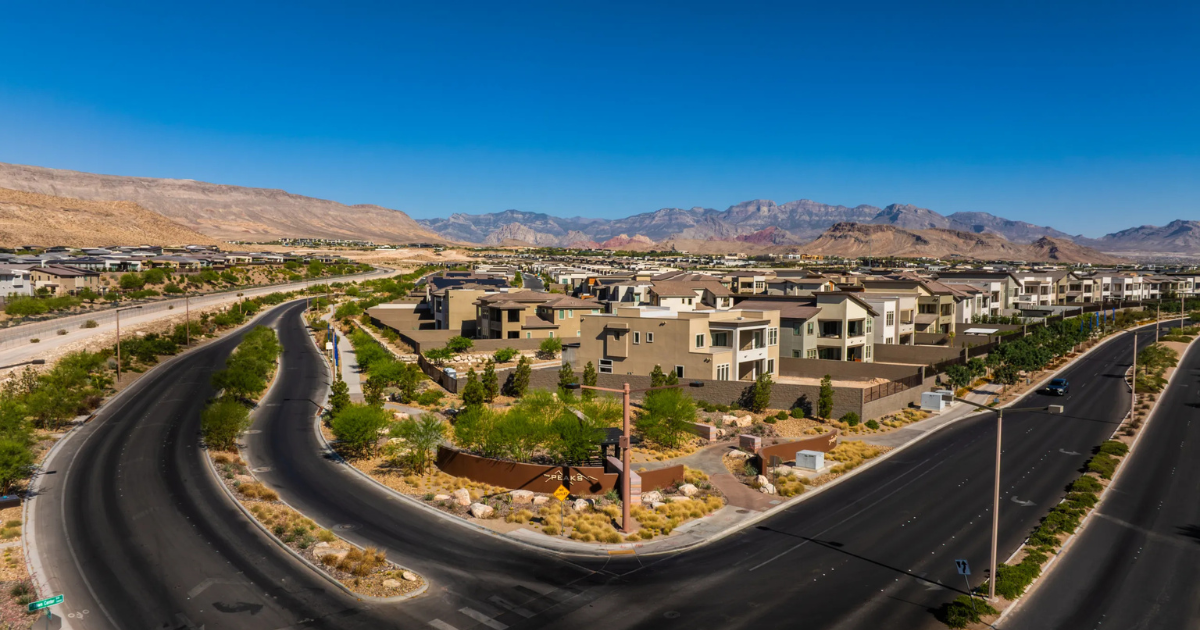
The Coast To The Desert
Red Rock Canyon sits twenty minutes from the west side of the valley, and hiking, climbing and trail running are year-round here in a way they are not in most of the country.
It is a genuinely different outdoor life rather than a smaller one. Whether that trade works is personal, and it is worth testing on a visit before you decide.
Monthly
What you keep each month
The household budget and the California income tax change at the same time. Comparisons that show only the first understate the move considerably.
| Monthly category | Los Angeles | Las Vegas | Change |
|---|---|---|---|
| Rent | $3,600 | $2,450 | −$1,150 |
| Utilities and internet | $300 | $400 | +$100 |
| Transportation and insurance | $850 | $1,050 | +$200 |
| Health costs and child care | $1,250 | $1,350 | +$100 |
| Food and household | $1,000 | $1,000 | — |
| California visits and travel | $100 | $450 | +$350 |
| Budget change | $7,100 | $6,700 | −$400 |
An illustrative household comparison, not regional price quotes. Running the air conditioning and driving a wider valley are real costs, and they belong in the table.
Then the tax
| Household income | Single filer | Married filing jointly |
|---|---|---|
| $150,000 | $1,219 / mo | $878 / mo |
| $200,000 | $1,607 / mo | $1,263 / mo |
| $250,000 | $1,994 / mo | $1,651 / mo |
The budget change above plus California state income tax no longer paid, on 2026 California brackets and standard deductions. Illustrative: your figure depends on filing status, deductions, credits and income source. Nevada residence does not change federal tax.
A full relocation runs around $16,000 — transport, packing, travel, temporary housing, deposits, initial furniture and a contingency.
At $150,000 jointly it is nearer 18 months. Every month after that is yours.
Your part of LA
It is not one move
What changes depends on where you are leaving
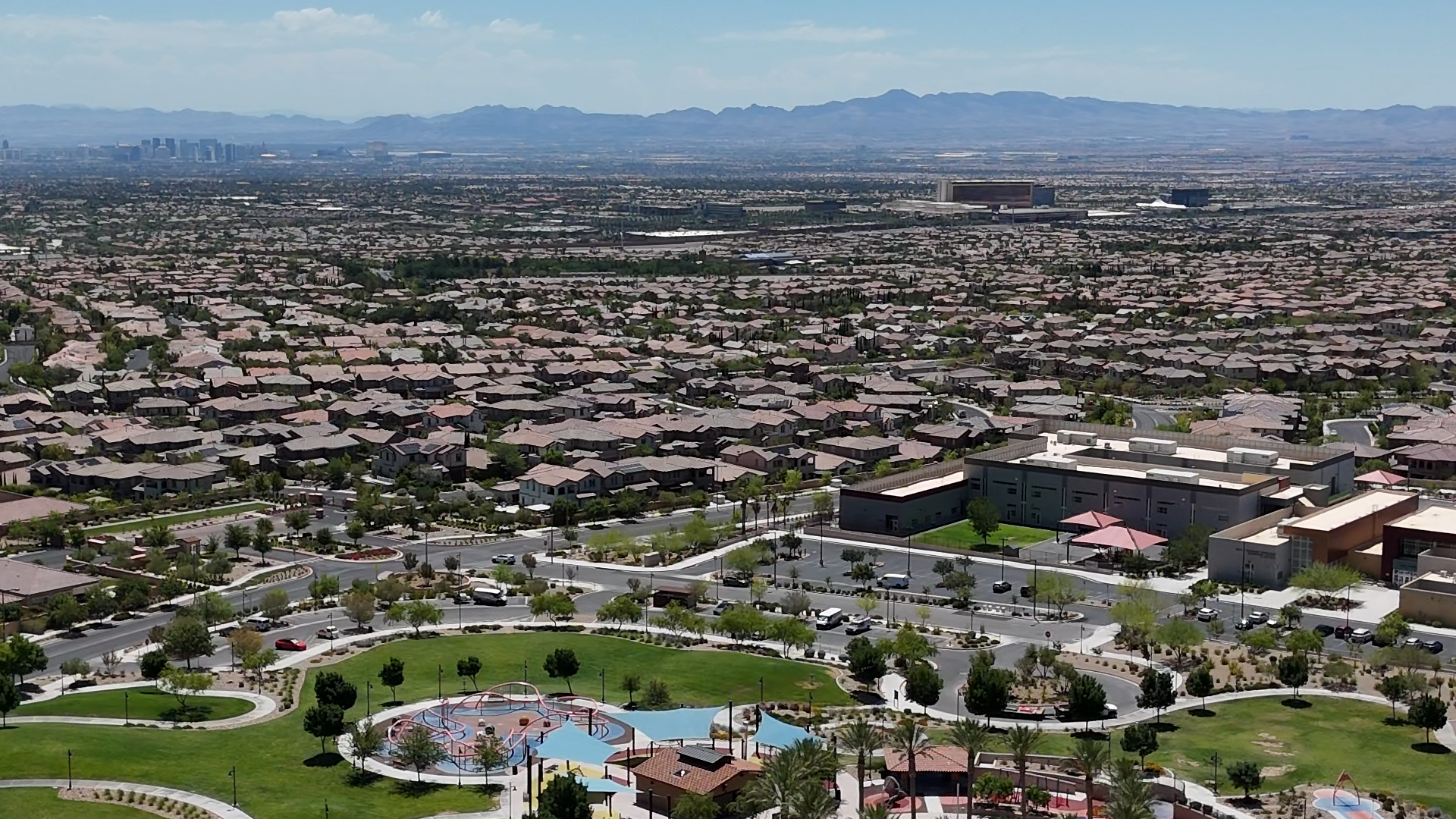
Los Angeles is not a single housing market or a single way of living, and the move looks different from each part of it. Find yours below.
The Westside and coastal communities
Santa Monica, Venice, Pacific Palisades, coastal South Bay
The biggest change is outdoor life rather than square footage. A backyard or pool does not reproduce marine weather, ocean access or a beach walk.
Work out which activities you would keep locally, shift to mornings or indoors, or turn into California trips. If you want parks and planned streets, look at Summerlin and Henderson communities such as Green Valley and Green Valley Ranch; if you want an urban setting, walk Downtown and the Arts District at street level. Neither is a direct substitute for a coastal LA neighborhood, and we will not pretend otherwise.
Central Los Angeles and the Eastside
Koreatown, Hollywood, Los Feliz, Silver Lake, Echo Park, Downtown
Start by counting how much you currently do without a car. A larger outer-valley home can add a second vehicle, parking and a lot more driving — price that before calling the housing difference a saving.
Central Las Vegas apartments, condos and townhomes are worth looking at alongside suburban options. Walk the real routes, check groceries and evening conditions, and ask about building fees, parking and sound transmission. A listing that says walkable needs testing against your actual routine.
The San Fernando Valley
Woodland Hills, Sherman Oaks, Encino, Northridge, Burbank, Glendale
You already know detached housing, driving and hot weather. That familiarity does not settle Las Vegas summer nights, a longer cooling season or a specific home's energy use — check the actual utility history rather than an estimate.
Compare Summerlin, the southwest valley, Henderson and northwest properties by work location, house type and budget. Larger lots, RV storage and workshops need parcel-specific zoning and association checks; a spacious driveway does not grant permission.
Burbank and Glendale households should look hard at the professional network they would leave. Work tied to studios, production, health care or local clients needs a different plan from a fully remote role.
The San Gabriel Valley and Pasadena
Pasadena, Alhambra, Arcadia, Monterey Park
List the schools, businesses, health providers and social connections you actually use, then visit the Nevada equivalents rather than relying on a general promise that familiar food and services exist here.
Build the shortlist around those destinations and the real workplace. Distance to one preferred shopping area matters less than the whole week's driving, and a neighborhood's reputation does not guarantee that the services your household depends on are nearby.
Long Beach, the South Bay and the north county
Long Beach, South Bay, Santa Clarita, Lancaster, Palmdale
Long Beach and South Bay households should separate coastal access, employment and airport convenience. Aerospace, logistics, health care and other site-based roles need an actual arrangement before you assign future income to a Nevada budget.
If you are in Santa Clarita, Lancaster or Palmdale, the housing comparison is narrower than a coastal-LA story suggests. Use your own payment and local property value, not a Westside benchmark. A familiar suburban or high-desert setting can still bring different work access, school routes and family travel.
Work & income
Settle this first
Production, aerospace and site-based work
The housing math only holds if the income does. This is the part we see households resolve last, and it should be first.
Get written employer approval for Nevada work, and with it the compensation treatment, required LA attendance, travel reimbursement, benefits and what happens if remote status ends. A manager's informal agreement does not settle payroll or insurance.
Production, entertainment, aerospace, port-related work, health care and the trades are site-dependent. Compare real offers and schedules — a job title shared by both markets does not mean equivalent pay, benefits or hiring prospects.
If you are self-employed, list the work that needs you physically in LA: meetings, shoots, installations, events, client visits. Count that travel even when it overlaps a family visit.
Calculate what happens if office attendance rises from once a month to once a week, pay changes, or a client relationship ends.
Would you look for local work, rent a small LA base, travel more, or move back? Price that before buying a house whose affordability depends on one arrangement.

The city
Amenities well above the city's weight class
Tourism supports dining, shows, shopping and professional sports far beyond what a metro of this size would normally sustain, and it is all available on an ordinary Tuesday.
For a household used to LA's range, this is the part that tends to settle the quality-of-life question.
Where to land
The valley
Areas to investigate
Starting points rather than rankings. Build the shortlist around ordinary life — the work route, the school run, the weekly shop — rather than around a community name you have read about.
| Area | Why it comes up for you | Main checks |
|---|---|---|
| Summerlin | Closest fit for Westside and San Gabriel Valley households wanting parks and planned streets | Village, dues, school assignment, work route |
| Green Valley & Green Valley Ranch | Mature services — suits Pasadena and South Bay households replacing an established neighborhood | Home systems, school route, traffic, association layers |
| Inspirada, Anthem & Seven Hills | Elevation and newer stock; check the drive if your work sits north or west | Exact subdivision, elevation, fees, daily travel |
| Southwest valley & Enterprise | Common landing spot for households keeping LA ties, for the I-15 run | Jurisdiction, construction, road access, noise |
| Southern Highlands & Mountain's Edge | Planned southern settings; verify RV and workshop rules if you are leaving the Valley | Work access, rules, fees, completed home cost |
| Northwest & Centennial | Larger parcels — the realistic option if you have trailers, a workshop or animals | Zoning, permitted storage, services, commute |
| North Las Vegas incl. Aliante | Lower entry prices; confirm the workplace route before committing | Specific location, workplace access, condition, dues |
| Downtown & Arts District | For Silver Lake, Echo Park and DTLA households wanting to stay car-light | Walking routes, groceries, parking, building finances, noise |
| Cadence & Lake Las Vegas | East-valley settings, and the furthest from the I-15 run back to LA | Daily services, fees, amenities, intended use |
Characteristics rather than rankings. Henderson students generally use Clark County School District's address and enrollment system — a Henderson address is not a separate city school district or a guarantee of a particular campus.
Where we come in
You know the county. We know the valley.
Most Los Angeles households we work with have already decided. What they need is someone who can match the area to how they actually live, deploy the proceeds into the right house, negotiate with a builder, and make sure nothing gets left on the table in year one.
Questions
Los Angeles to Las Vegas, answered
What does my Los Angeles equity buy in Las Vegas?
How much do I actually keep each month?
How long before the move pays for itself?
I have a 3% mortgage. Does the move still work?
How bad is the summer coming from Los Angeles?
Where do Los Angeles households usually end up?
Is Las Vegas cheaper than Los Angeles?
I live in Santa Clarita or the Antelope Valley. Does this still apply?
Keep reading
More for people moving here
Start here
California to Las Vegas
Taxes, residency, selling or keeping your home.
Where
All 30 Summerlin villages
The west valley, village by village.
Budget
Cost of living
Beyond the mortgage payment.
Comparison
What $400k buys here
Against the rest of the west coast.
Choosing
Evaluating a neighborhood
The checks that are not on the listing.
General
Las Vegas relocation guide
What to sort out before and after you arrive.
Sources and currency
Los Angeles median: September 2026 county figure. Las Vegas median: our own November 2026 market update. California income tax figures calculated on 2026 California brackets and standard deductions. Clark County property tax caps: Clark County Assessor. California residency and sourcing: California Franchise Tax Board.
Budget comparisons, equity scenarios, loan illustrations and tax savings on this page are illustrative assumptions for hypothetical households, not price quotes, rate quotes or predictions. Tax rules depend entirely on your own facts. Nothing here is tax, legal or lending advice — we are real estate agents, and the residency and sourcing questions need a qualified tax adviser.